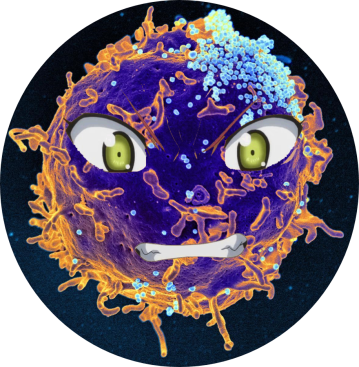
 When you have leukemia your body swims in a sea of cancer. Your organs, every part of your body that is touched by your blood is bathed in the cancer’s mutated white blood cells. Similarly, your lymphatic system that normally transports the lymph fluids that support your immune system, becomes a pathway to distribute the mutated cells. There are numerous varieties of leukemia, some rapid, devastating and tragic, particularly when they strike the young. Others types are more benign if such a word can be used with cancer. My father had CML, but unfortunately passed away before the routine use of imatinib, the daily pill that has allowed the current generation of CML sufferers to increasingly achieve normal lifespans1. My father’s passing was also a classic example of the paradoxes of population health. Often it is not the treatment itself, but where you get treatment that can greatly impact your likelihood of survival. My father passed, not so much due to his advanced leukemia, as to the complication of an overly delayed and poorly executed splenectomy and extensive vascular adhesion2; he bleed to death. This kind of strategic error in the timing and planning for a splenectomy may be less likely to occur under current medical practices, but the inherent risks associated with being treated in medical catchments located in areas such as depressed Rust Belt communities negatively impacts everyone’s chances of long-term survival regardless of the disease processes.
My own flavor of leukemia is CLL, a generally slow growth and modestly pertinacious form of cancer. Or so my doctors tell me in any event. My former GP in particular was almost cheerful in describing the positive outlook for the disease. Discussions with various doctors, review of the literature, and general reading on leukemia suggests there is a 3, 8, and 20 rule for CLL survival. Three years is a tragedy that gets you highlighted in a local newspaper article, eight years seems to be about the average survival time for the disease, and 20 years is how long many doctors will tell you they have been treating a specific CLL patient who has no side effects. These atypical stories of long-term survival are meant to show the potential of living with the disease, but no one pretends science can beat it. There is no cure for CLL, and there is no standard treatment. There are a number of approaches that can reduce the impact of the disease but it depends on the pace of the disease, your overall health, your oncologist’s preference and what is available in your area. Again, in population health management, location matters.
CLL, like every other leukemia is your body’s internal disagreement with its own white blood cells. It is a lazy disease where your white blood cells become the unemployed relative who comes to your house unexpectedly, moves in, takes up space and contributes nothing to the upkeep of the property. My white blood cells are immortal but increasingly useless. They do nothing but take up space, using valuable real estate needed by my immune system and my red blood cells and the while blood cells that actually do their job. CLL is generally seen as a disease of older white men so its progression is often slow and, like prostate cancer, it can be non-debilitating. If you get CLL when you are 72 and you pass away when you are in your 80s, the disease becomes part of the overall force of mortality that defines your life. I am part of the 3. I am, however, in a good location for care. Having moved from Rai O to Rai II, I am most interested in how this adventure will continue to evolve.
1) Hannah Bower, Magnus Björkholm, Paul W. Dickman, Martin Höglund, Paul C. Lambert, Therese M.-L. Andersson. (2016). “Life Expectancy of Patients With Chronic Myeloid Leukemia Approaches the Life Expectancy of the General Population.” Journal of Clinical Oncology 34, no. 24 (August 2016) 2851-2857. DOI: 10.1200/JCO.2015.66.2866
2) Lee J. Skandalakis, John E. Skandalakis, Panajiotis N. Skandalakis. (2009). Surgical Anatomy and Technique: A Pocket Manual. 3rd Addition. Springer Science & Business Media, Jan 9, 2009
3) Sameer A. Parikh, Kari G. Rabe, Neil E. Kay, Timothy G. Call, Wei Ding, Susan M. Schwager, Deborah A. Bowen, Michael Conte, Diane F. Jelinek, Susan L. Slager, Tait D. Shanafelt. (2014). “Chronic Lymphocytic Leukemia In Young (≤ 55 Years) Patients: A Comprehensive Analysis Of Prognostic Factors And Outcomes.” Haematologica. January 2014 99: 140-147; Doi:10.3324/haematol.2013.086066
 James W. McNally
Leave a comment